
Why Medical Catheters Are Key to Non-Invasive Medical Procedures
The Direct Answer: Catheters Enable the Shift from Open Surgery to Minimally Invasive Care
Medical catheters are the enabling technology that makes non-invasive and minimally invasive procedures clinically viable. Without catheters, most of what we now call "minimally invasive surgery" would still require large incisions, extended hospital stays, and significantly higher complication rates. Catheter‑based techniques now account for 75% of cardiovascular procedures in developed healthcare systems, up from just 45% a decade ago.
The global catheters market stood at US$28.51 billion in 2024 and is projected to reach US$45.99 billion by 2030, advancing at a CAGR of 8.5%. Other industry analyses place the market at US$62.0 billion in 2025 with a forecast of US$85.2 billion by 2030. These figures reflect not just market growth but a fundamental reorientation of how modern medicine delivers care—through tubes, not scalpels.
Why Catheters Are Indispensable to Non‑Invasive Procedures
Non‑invasive and minimally invasive procedures are defined by what they avoid: large surgical incisions, general anesthesia in many cases, prolonged hospitalization, and the associated risks of infection and tissue trauma. Catheters are the instruments that make this avoidance possible.
Consider the clinical reality: a percutaneous drainage procedure that once required a surgical team, an operating room, and days of recovery can now be performed by an interventional radiologist using image guidance, a catheter, and a drainage bag—often as an outpatient procedure. Studies show that 69.8% of patients show improvement within 24 hours of percutaneous catheter drainage placement, with radiological fluid clearance achieved in 83.6% of cases within the same timeframe.
This is the essence of why medical catheters are key: they convert what was once invasive surgery into a percutaneous, image‑guided intervention that achieves the same clinical outcome with dramatically lower morbidity.
The Evolution of Catheter Design: From Simple Tubes to Precision Instruments
The modern medical catheter is far removed from its rudimentary predecessors. Today's catheters are precision‑engineered devices incorporating advanced biomaterials, hydrophilic coatings, radiopaque markers, and sophisticated retention mechanisms. These innovations directly enable non‑invasive procedures by improving safety, reducing complications, and expanding the range of conditions that can be managed percutaneously.
Material Advancements
Contemporary catheters are manufactured from medical‑grade TPU (thermoplastic polyurethane) and silicone—materials chosen for their biocompatibility, flexibility, and resistance to kinking. These materials minimize tissue irritation and prevent adhesion to the wound site during long‑term indwelling, which is essential for patients requiring extended drainage periods.
Hydrophilic surface coatings represent another critical advancement. When activated by moisture, these coatings become ultra‑slippery, reducing friction during insertion by up to 90% compared to uncoated catheters. This translates directly to reduced tissue trauma and improved patient comfort during placement.
Visualization and Positioning
Modern catheters incorporate radiopaque lines or markers that are visible under fluoroscopy, CT, or X‑ray. This feature allows clinicians to confirm catheter position in real time without additional contrast injections or exploratory maneuvers. Surface markings at centimetre intervals provide immediate visual feedback on insertion depth, reducing the risk of malposition.
Balloon Fixation vs. Pigtail Retention: A Critical Distinction
One of the most important differentiators in drainage catheter design is the retention mechanism—how the catheter stays in place once positioned. This directly impacts the viability of non‑invasive drainage procedures, particularly for patients requiring long‑term indwelling catheters.
The Pigtail Approach
Traditional pigtail catheters rely on a curled distal end that forms a loop, secured by a locking suture that runs the full length of the catheter. While effective in many applications, pigtail fixation has inherent limitations: the loop can straighten with patient movement, the locking mechanism can fail, and the catheter remains susceptible to dislodgement rates that can reach up to 30% in some clinical settings.
The Balloon Alternative
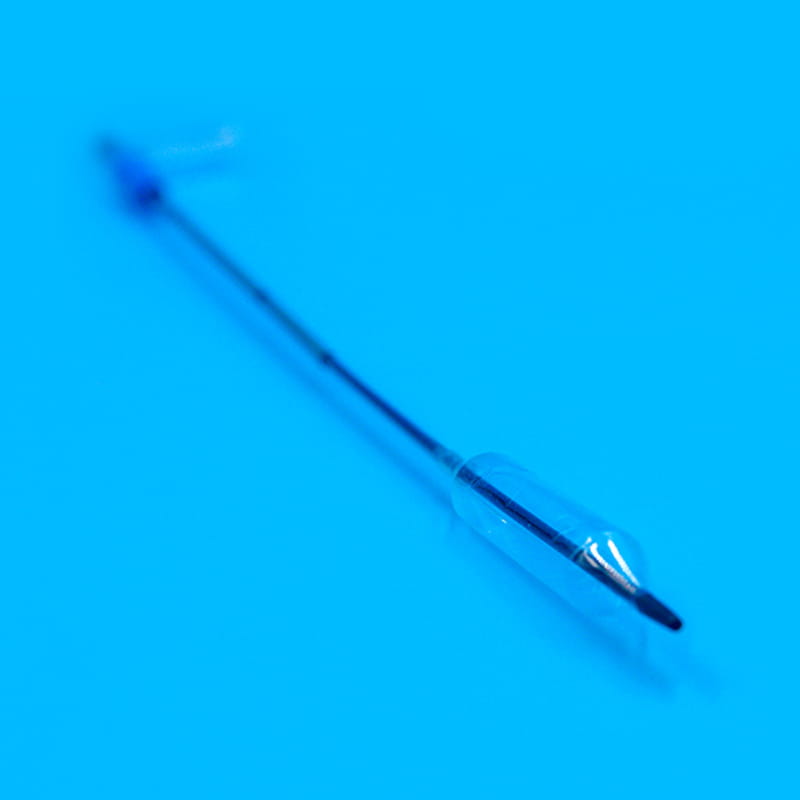
Balloon‑retention catheters address these limitations through a fundamentally different mechanism: a low‑pressure balloon near the distal tip that is inflated with sterile saline after placement. Once inflated, the balloon anchors the catheter against the internal wall of the cavity, providing secure fixation that is independent of patient positioning or activity.
Clinical evidence supports the superiority of balloon fixation in specific contexts. One study found that balloon catheters were independently associated with reduced drain displacement with an adjusted odds ratio of 0.27 (95% CI 0.08–0.87, p=0.028). The authors concluded that balloon drains "may have a role where sutures are not used or where displacement would be associated with significant clinical risk".
Comparative Summary
| Feature | Pigtail Catheter | Balloon‑Retention Catheter |
|---|---|---|
| Fixation mechanism | Curled loop with locking suture | Inflatable balloon anchor |
| Dislodgement risk | Higher (up to 30% in some settings) | Lower (adjusted OR 0.27) |
| Movement tolerance | Limited—loop can straighten | High—balloon maintains position |
| Suitability for long‑term indwelling | Moderate | High |
| Irrigation capability | Single lumen (limited) | Dual lumen (independent irrigation) |
Infection Control: The Non‑Invasive Procedure's Greatest Challenge
Infection remains the most significant complication associated with indwelling catheters. Catheter‑related bloodstream infections carry mortality rates up to 25%, and indwelling catheter infection rates can reach 25% in some settings. Central venous catheters alone are responsible for approximately 20% of bloodstream infections.
These statistics underscore why catheter design directly impacts the safety of non‑invasive procedures. Key infection‑control features include:
- Closed drainage systems that prevent fluid from contacting the external environment
- Antimicrobial and hydrophilic coatings that resist biofilm formation
- Single‑use, sterile, individually packaged devices that eliminate cross‑contamination risk
- Reduced manipulation requirements—fewer line changes mean fewer contamination opportunities
The shift toward antimicrobial and hydrophilic‑coated catheters represents one of the most significant trends in the catheter market, driven by both clinical need and regulatory pressure. For non‑invasive procedures to remain viable alternatives to surgery, infection rates must be kept acceptably low—and catheter design is the first line of defence.
Dual‑Lumen Design: Enabling Drainage and Irrigation in a Single Device
Perhaps the most transformative innovation in drainage catheter technology is the dual‑lumen configuration. A dual‑lumen catheter contains two independent channels within a single shaft: one lumen for drainage and a second for balloon inflation and/or irrigation.
This design is clinically significant because it allows the clinician to:
- Drain fluid continuously through the primary lumen while maintaining balloon fixation through the secondary lumen
- Irrigate the cavity with sterile saline or antibiotic solution without interrupting drainage or removing the catheter
- Administer localised therapy directly to the infection site—a capability that is particularly valuable in abscess management
In neurosurgical applications, dual‑lumen catheter systems have been employed for continuous drainage, irrigation, and intraventricular antibiotic therapy in the treatment of brain abscesses with ventriculitis. The dual‑lumen system was specifically chosen for "its ability to provide continuous irrigation and drainage, effectively addressing issues of catheter blockage and enhancing localised antibiotic delivery".
For general drainage applications, the dual‑lumen design eliminates the need for separate irrigation catheters or repeated catheter exchanges—both of which increase procedural complexity, infection risk, and patient discomfort.
Introducing the Sterile Single‑Use Dual‑Lumen Balloon Retention Drainage Catheter Set
Anjun Medical Technologies (Suzhou) Co., Ltd. specialises in the research, development, and manufacturing of precision medical catheters. Our flagship drainage product—the Sterile Single‑Use Dual‑Lumen Balloon Retention Drainage Catheter Set (also referred to as the Dual‑Lumen Balloon Fixation Drainage Catheter for Abscess Irrigation)—embodies the design principles and clinical capabilities described above.
This Class II sterile, single‑use, interventional consumable is engineered for long‑term indwelling drainage of fluid collections across multiple anatomical sites. The complete set includes:
- Dual‑lumen drainage catheter with a primary drainage lumen and a dedicated balloon inflation lumen
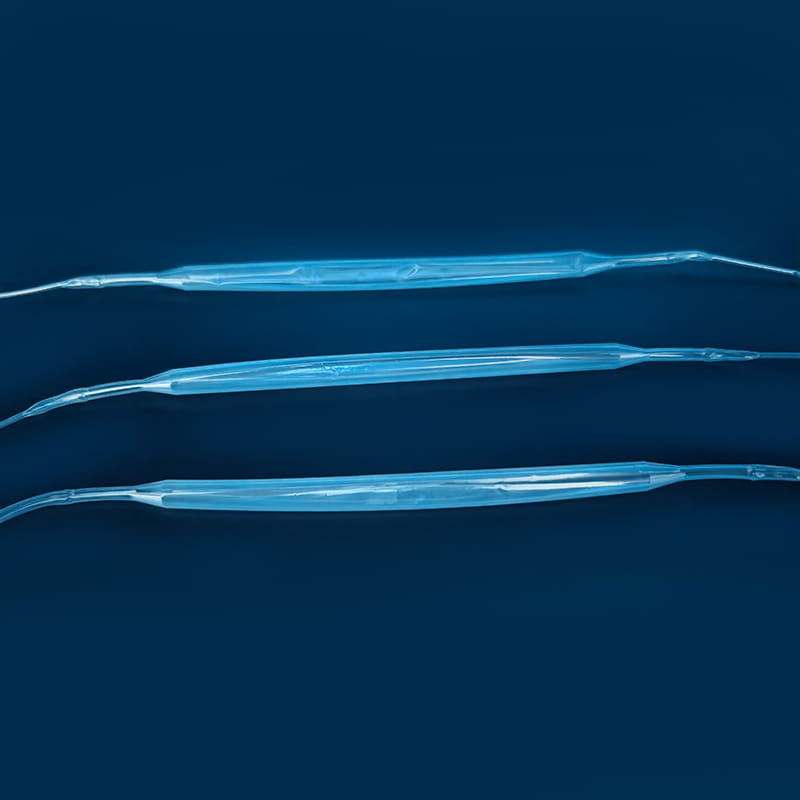
- Integrated low‑pressure balloon near the distal tip for secure internal fixation
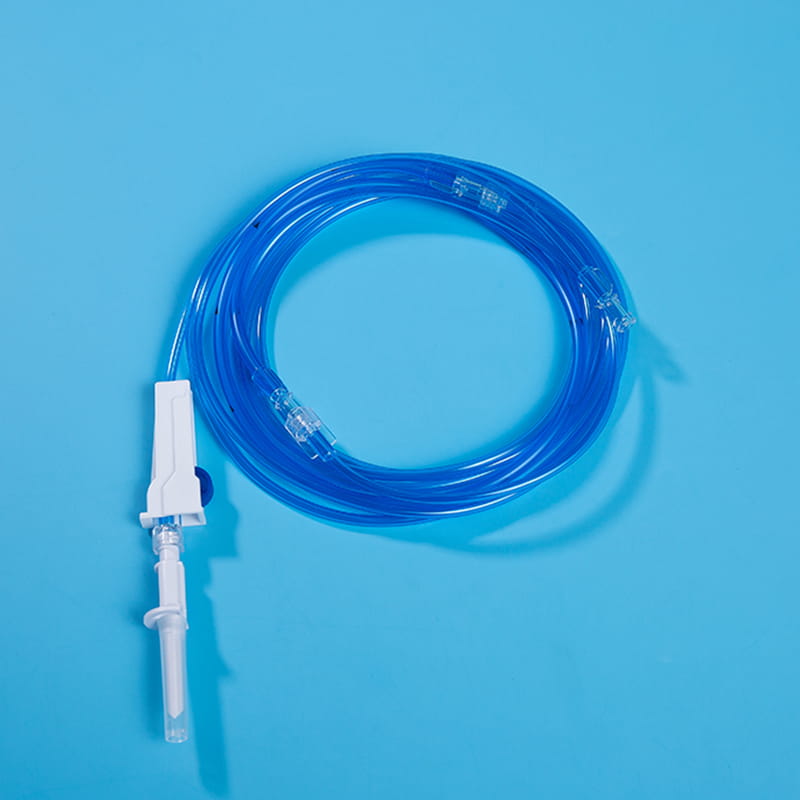
- Blue three‑way stopcock enabling independent drainage, irrigation, or combined therapy
- Blue one‑way inflation valve with check‑valve functionality for balloon maintenance
- Guidewire and puncture sheath for percutaneous placement
- Sterile transparent adhesive dressing for external securement and site protection
Key design features that make this catheter ideal for non‑invasive drainage procedures include:
- Medical‑grade TPU/silicone construction—biocompatible, non‑adherent, and suitable for long‑term indwelling
- Hydrophilic ultra‑slip coating—reduces insertion friction and tissue trauma
- Full‑length radiopaque line—visible under fluoroscopy, CT, and X‑ray for position verification
- Centimetre‑scale surface markings—provides immediate visual feedback on insertion depth
- Low‑pressure balloon—inflates uniformly, provides haemostatic compression, and secures the catheter without damaging surrounding tissue
- Ethylene oxide sterilisation—ensures sterility for single‑patient use
Clinical applications span multiple specialties:
- Thoracic surgery—pleural effusion, pneumothorax, empyema drainage
- Gastrointestinal/hepatobiliary surgery—abdominal ascites, liver abscess, biliary fluid collections
- Interventional radiology—pericardial effusion, pelvic abscess, deep soft‑tissue abscess
- Post‑surgical drainage—subcutaneous and deep wound exudate management
The dual‑lumen configuration enables simultaneous drainage and irrigation—clinicians can drain purulent material while instilling saline or antibiotic solution through the secondary lumen, all without catheter exchange or additional access points.
Available in sizes ranging from 8Fr to 16Fr, the catheter accommodates varying flow requirements across thoracic, abdominal, and superficial abscess applications.
Video source: Anjun sterile single-use dual lumen balloon retention drainage catheter set
Clinical Workflow: From Access to Drainage
The percutaneous placement of a balloon‑retention drainage catheter follows a standardised, minimally invasive workflow:
- Puncture—A puncture needle is advanced through the skin to the target fluid collection under image guidance
- Guidewire placement—A guidewire is introduced through the needle into the cavity
- Needle removal and tract dilation—The needle is withdrawn and the tract is dilated over the guidewire
- Catheter insertion—The dual‑lumen catheter is advanced over the guidewire into the cavity
- Balloon inflation—Sterile saline is injected through the blue inflation valve to expand the retention balloon
- Securement—The catheter is secured externally with the sterile transparent dressing
- Drainage initiation—The primary lumen is connected to a closed drainage system
This entire sequence is performed percutaneously, without surgical incision, and typically under local anaesthesia with image guidance. The balloon provides immediate internal fixation, eliminating the need for purse‑string sutures or external taping that can fail with patient movement.
Frequently Asked Questions
What makes balloon‑retention catheters more secure than pigtail catheters?
Balloon‑retention catheters use an inflatable balloon that anchors against the internal wall of the cavity, providing fixation that is independent of patient position or activity. Pigtail catheters rely on a curled loop that can straighten with movement, leading to higher dislodgement rates. Clinical data shows balloon catheters are associated with significantly reduced drain displacement (adjusted OR 0.27).
How long can a balloon‑retention drainage catheter remain in place?
Balloon‑retention catheters are designed for long‑term indwelling. Clinical studies have documented successful drainage periods ranging from 3 to 67 days (median 6 days) with balloon catheters. The actual duration depends on the clinical indication, infection status, and drainage requirements.
What is the advantage of a dual‑lumen design?
A dual‑lumen catheter provides two independent channels within a single device. The primary lumen handles continuous drainage while the secondary lumen manages balloon inflation and/or irrigation. This allows clinicians to irrigate the cavity with antibiotics or saline without interrupting drainage or exchanging the catheter—a significant advantage in managing infected fluid collections.
Are these catheters visible on imaging?
Yes. Modern drainage catheters incorporate full‑length radiopaque lines or markers that are clearly visible under fluoroscopy, CT, and X‑ray. This allows clinicians to confirm catheter position and detect any migration without additional contrast injections.
What infection control measures are incorporated?
Key infection‑control features include closed drainage systems that prevent environmental contamination, single‑use sterile packaging that eliminates cross‑contamination risk, and hydrophilic coatings that resist bacterial adhesion and biofilm formation. The reduced manipulation requirements of balloon‑retention catheters also minimise infection opportunities compared to catheters requiring frequent repositioning.
What sizes are available?
Balloon‑retention drainage catheters are typically available in sizes ranging from 8Fr to 16Fr, accommodating different flow requirements across thoracic, abdominal, and superficial abscess applications. The appropriate size is selected based on the viscosity of the drainage material and the volume of the fluid collection.
For more information, please call us at +86-18913710126 or email us at .
Polyimidové hadičky se staly nepostradatelnými v moderní konstrukci zdravotnických zařízen...
Porozumění ochranné trubici vodícího drátu FEP Minimálně invazivní lékařské postu...
A trubice lékařské peristaltické pumpy je specializovaný komponent pro přenos tekut...
Evoluce technologie vizualizace katétru Minimálně invazivní postupy zásadně proměnily mo...
Pochopení lékařských katétrů v moderním zdravotnictví Lékařská zařízení způsobila revolu...
Přímý katétr zasahuje většinu dýchacích cest, ale poslední centimetr do větve tracheostomie ...